Introduction
Introduction to the concept of artificial intelligence replacing Content writers has been a topic of intense debate in recent years. The rise of AI-powered tools and their increasing capabilities have led many to wonder if human content writers will soon be a thing of the past. The idea of machines being able to generate high-quality content that is engaging, informative, and well-researched has sparked both excitement and fear among writers, publishers, and marketers. While some people believe that AI is the Future of content creation and will revolutionize the way we produce and consume content, others are skeptical about the ability of machines to replace the creativity, nuance, and emotional depth that human writers bring to the table.
The truth is that AI has made tremendous progress in recent years, and its applications in content creation are becoming increasingly sophisticated. From automated news articles to chatbots that can generate human-like responses, AI is indeed capable of producing high-quality content that is often indistinguishable from that written by humans. However, the question remains whether AI is truly capable of replacing human content writers, or if it is simply a tool that can augment and support their work. To answer this question, it is essential to understand the current state of AI in content creation, its strengths and limitations, and the potential impact it may have on the writing industry.
One of the primary drivers of the hype surrounding AI-powered content creation is the potential for increased efficiency and productivity. With the ability to generate content quickly and at scale, AI-powered tools can help businesses and publishers meet the ever-increasing demand for high-quality content. Additionally, AI can help with tasks such as research, organization, and editing, freeing up human writers to focus on the creative aspects of content creation. However, despite these benefits, there are also concerns about the potential drawbacks of relying too heavily on AI-generated content. For example, AI algorithms may lack the nuance and emotional depth that human writers bring to a piece, resulting in content that is dry, formulaic, and lacking in personality.
Furthermore, the use of AI in content creation also raises important questions about authorship, ownership, and accountability. If a machine is generating content, who is responsible for its accuracy, fairness, and potential biases? How can we ensure that AI-generated content is transparent, trustworthy, and aligned with the values and principles of human writers? These are complex questions that require careful consideration and debate, and they highlight the need for a nuanced and multifaceted approach to understanding the role of AI in content creation.
In this blog, we will delve into the truth behind the hype surrounding AI-powered content creation, exploring the current state of the technology, its potential applications and limitations, and the potential impact it may have on the writing industry. We will examine the benefits and drawbacks of using AI in content creation, and discuss the important questions and concerns that arise from this technology. By exploring the complex and multifaceted relationship between AI and human content writers, we hope to provide a deeper understanding of the role that AI is likely to play in the future of content creation, and the ways in which it can be used to augment and support the work of human writers, rather than replacing them. Ultimately, our goal is to provide a balanced and informed perspective on the potential of AI in content creation, and to explore the ways in which this technology can be harnessed to produce high-quality, engaging, and effective content that meets the needs of audiences and businesses alike.
The Current State of AI in Content Creation
The Current State of AI in Content Creation is a topic that has garnered significant attention in recent years, with many speculating about the potential impact of artificial intelligence on the writing industry. One of the most pressing questions on everyone’s mind is whether AI is replacing content writers. The truth behind the hype is that while AI has made tremendous progress in content creation, it is not a replacement for human writers, at least not yet.
The rise of AI-powered content generation tools has been remarkable, with many platforms and software programs emerging that can produce high-quality content, including articles, blog posts, and even entire books. These tools use complex algorithms and natural language processing (NLP) to analyze vast amounts of data and generate content that is often indistinguishable from that written by humans. However, despite the impressive capabilities of these tools, they are not a substitute for human writers.
One of the primary reasons why AI is not replacing content writers is that while it can generate content, it lacks the creativity, nuance, and emotional intelligence that human writers bring to the table. AI-generated content often sounds robotic and lacks the personality and tone that a human writer can inject into their work. Furthermore, AI tools are only as good as the data they are trained on, and if the data is biased or incomplete, the content generated will reflect these limitations.
Another reason why AI is not a replacement for human writers is that content creation is not just about generating words on a page. It involves understanding the context, nuances, and subtleties of language, as well as the ability to convey complex ideas and emotions in a way that resonates with readers. Human writers bring a level of depth, insight, and perspective to their work that AI tools simply cannot replicate.
That being said, AI is certainly changing the way content is created, and it is likely to continue to play a significant role in the writing industry in the future. Many companies are already using AI-powered tools to generate content, such as product descriptions, social media posts, and even entire websites. These tools can help to streamline the content creation process, reduce costs, and increase efficiency.
However, rather than replacing human writers, AI is more likely to augment and support their work. For example, AI tools can help with research, organization, and editing, freeing up human writers to focus on the creative aspects of content creation. Additionally, AI can help to identify gaps in content, suggest new topics and ideas, and even assist with the optimization of content for search engines.
In conclusion, while AI has made significant progress in content creation, it is not a replacement for human writers. The truth behind the hype is that AI is a tool that can be used to support and augment the work of human writers, but it is not a substitute for the creativity, nuance, and emotional intelligence that humans bring to the table. As the technology continues to evolve, it is likely that we will see even more innovative applications of AI in content creation, but for now, human writers remain an essential part of the process.
The future of content creation is likely to be a collaboration between humans and AI, with each playing to their respective strengths. Human writers will continue to bring their creativity, insight, and perspective to the table, while AI tools will provide support and assistance with tasks such as research, organization, and editing. By working together, humans and AI can create high-quality content that is engaging, informative, and effective, and that meets the needs of readers and audiences around the world.
Ultimately, the key to success in content creation is to understand the strengths and limitations of both human writers and AI tools, and to use each to their best advantage. By doing so, we can create a future where content creation is more efficient, effective, and engaging than ever before, and where human writers and AI tools work together in harmony to produce high-quality content that resonates with readers and audiences everywhere. The current state of AI in content creation is just the beginning, and as the technology continues to evolve, we can expect to see even more exciting developments and innovations in the years to come.
The Capabilities and Limitations of AI Writing Tools
The Capabilities and Limitations of AI Writing Tools is a topic that has been widely debated in recent years, with many wondering if AI is replacing content writers. The truth behind the hype is that AI writing tools have made tremendous progress in generating high-quality content, but they are not yet ready to replace human content writers. While AI can process and analyze vast amounts of data, generate ideas, and even create coherent text, it lacks the creativity, empathy, and emotional intelligence that human writers bring to the table.
One of the primary capabilities of AI writing tools is their ability to generate content quickly and efficiently. With the help of natural language processing (NLP) and machine learning algorithms, AI can produce large volumes of content in a fraction of the time it would take a human writer. This makes AI writing tools ideal for tasks such as data-driven content, product descriptions, and social media posts, where the focus is on conveying information in a clear and concise manner. Additionally, AI can help with content optimization, suggesting alternative phrases, and even predicting the success of a particular piece of content.
However, the limitations of AI writing tools become apparent when it comes to creating complex, nuanced, and emotionally resonant content. While AI can generate text that is grammatically correct and free of errors, it often lacks the subtlety and depth that a human writer can bring to a piece. AI struggles to understand the context, tone, and subtext of a piece, which can result in content that feels flat, robotic, and unengaging. Furthermore, AI writing tools are only as good as the data they have been trained on, and if the training data is biased or limited, the output will reflect those limitations.
Another significant limitation of AI writing tools is their inability to conduct original research or interviews. While AI can analyze and synthesize existing information, it cannot replace the value of human interaction, observation, and experience. Human writers can conduct interviews, attend events, and engage with people in a way that AI cannot, which allows them to gather unique insights and perspectives that can elevate their content. Moreover, human writers can bring their own experiences, biases, and perspectives to a piece, which can result in content that is more relatable, authentic, and engaging.
The truth behind the hype is that AI writing tools are not meant to replace human content writers but rather to augment and support them. By automating routine and repetitive tasks, AI can free up human writers to focus on higher-level creative work, such as developing concepts, crafting compelling narratives, and editing content for tone and style. Additionally, AI can help human writers with research, suggesting relevant sources, and even providing ideas and inspiration.
In conclusion, while AI writing tools have made significant progress in generating high-quality content, they are not yet ready to replace human content writers. The capabilities of AI writing tools are undeniable, but their limitations are equally significant. By understanding the strengths and weaknesses of AI writing tools, content creators can harness their power to augment and support human writers, rather than replacing them. The future of content creation is likely to be a collaboration between humans and AI, where each plays to their respective strengths, resulting in content that is more engaging, informative, and effective. As the technology continues to evolve, it will be exciting to see how AI writing tools develop and improve, but for now, human content writers remain an essential part of the content creation process.
The role of human content writers is evolving, and they must learn to work alongside AI tools to produce high-quality content. This collaboration can lead to new and innovative forms of content that were previously unimaginable. Human writers can focus on developing the creative vision, while AI tools can help with the execution, research, and optimization. By embracing this partnership, content creators can unlock new possibilities and push the boundaries of what is possible with content. Ultimately, the combination of human creativity and AI technology has the potential to revolutionize the way we create and consume content, and it will be exciting to see how this partnership develops in the future.
The potential applications of AI writing tools are vast and varied, and they can be used in a wide range of industries, from marketing and advertising to education and journalism. As the technology continues to improve, we can expect to see AI writing tools being used in new and innovative ways, such as generating interactive content, creating personalized learning materials, and even producing entire books and scripts. However, it is essential to remember that AI writing tools are only a tool, and they should be used to support and augment human creativity, rather than replacing it. By striking the right balance between human and artificial intelligence, we can unlock the full potential of content creation and produce content that is more engaging, informative, and effective than ever before.
In the end, the question of whether AI is replacing content writers is a complex one, and the answer is not a simple yes or no. While AI writing tools have made significant progress in generating high-quality content, they are not yet ready to replace human content writers. Instead, they should be seen as a tool to support and augment human creativity, freeing up writers to focus on higher-level creative work. By embracing this partnership, content creators can unlock new possibilities and push the boundaries of what is possible with content. As the technology continues to evolve, it will be exciting to see how AI writing tools develop and improve, and how they will be used to create new and innovative forms of content.
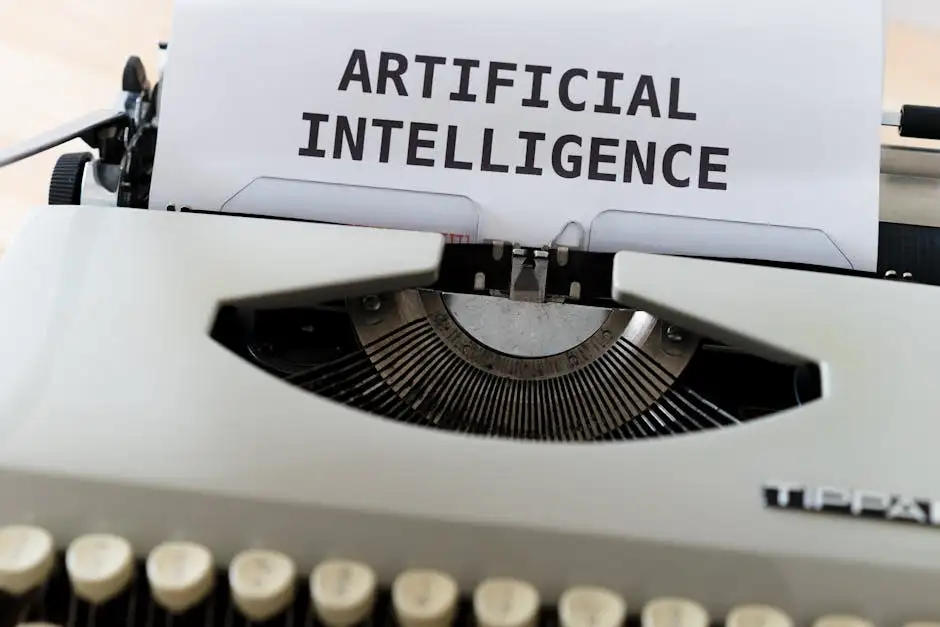
Can AI Truly Replace Human Content Writers
Is AI Replacing Content Writers The Truth Behind the Hype has been a topic of intense debate in recent years with the rapid advancements in artificial intelligence and machine learning technologies the question on everyone’s mind is can ai truly replace human content writers the answer to this question is not a simple yes or no as there are various factors to consider before making a conclusion in this blog section we will delve into the world of ai content writing and explore the capabilities and limitations of ai writers to determine if they can indeed replace their human counterparts
one of the primary reasons why ai is being considered as a replacement for human content writers is its ability to produce high volume of content in a relatively short period of time ai algorithms can analyze vast amounts of data and generate content based on that data much faster than a human writer this is particularly useful for businesses that require a large amount of content to be produced on a daily basis such as news articles blog posts and social media updates however the quality of the content produced by ai is still a subject of debate while ai can generate content that is grammatically correct and free of spelling errors it often lacks the nuance and creativity that a human writer can bring to the table
another factor to consider is the type of content being produced ai is well suited for producing certain types of content such as product descriptions data driven articles and social media posts that require minimal creativity and originality however when it comes to producing high quality engaging content that requires a deep understanding of the subject matter and the ability to think creatively ai is still far behind human writers for example ai may struggle to produce content that is humorous sarcastic or ironic as these types of content require a level of emotional intelligence and cultural understanding that ai currently lacks
furthermore ai content writers are only as good as the data they are trained on if the training data is biased or limited the ai algorithm will produce content that is also biased or limited this can result in content that is not only low quality but also potentially offensive or inaccurate human writers on the other hand can bring their own experiences and perspectives to the table which can result in more diverse and inclusive content
in addition to the quality of the content produced by ai the role of human content writers extends far beyond just writing content human writers are also editors researchers and strategists they are responsible for researching topics identifying trends and developing content strategies that align with the goals and objectives of the business ai algorithms can assist with these tasks but they are not yet capable of replacing the critical thinking and problem solving skills that human writers bring to the table
finally it is worth noting that while ai may be able to replace some aspects of human content writing it is unlikely to replace the entirety of the job human writers will continue to be needed to review edit and refine the content produced by ai algorithms to ensure that it meets the required standards of quality and accuracy in fact many businesses are already using ai as a tool to augment the work of human writers rather than replacing them entirely by automating routine tasks such as research and data analysis ai can free up human writers to focus on higher level tasks such as strategy development and creative direction
in conclusion while ai has made significant advancements in recent years and is capable of producing high volume of content it is not yet ready to replace human content writers entirely the capabilities and limitations of ai writers are still being explored and it is likely that ai will be used to augment the work of human writers rather than replacing them the future of content writing is likely to be a collaborative one where human writers and ai algorithms work together to produce high quality engaging content that meets the needs of businesses and audiences alike by understanding the strengths and weaknesses of both human and ai writers we can harness the power of technology to enhance the content creation process and produce better results for everyone involved
The Role of Human Touch in Quality Content
The Role of Human Touch in Quality Content is a topic of great significance in today’s digital landscape, and one that has sparked intense debate in recent years, particularly with the rise of artificial intelligence and its potential to replace human content writers. As we delve into the world of content creation, it becomes increasingly evident that while AI has made tremendous strides in generating content, it is still far from replicating the nuances and complexities of human thought and emotion.
The question on everyone’s mind is, can AI truly replace content writers, or is it just a tool designed to augment and enhance the content creation process? To answer this, let’s first examine the capabilities and limitations of AI in content generation. AI-powered tools can process vast amounts of data, recognize patterns, and generate text based on that data. This has led to the development of automated content generation platforms that can produce high-quality content, such as news articles, social media posts, and even entire books.
However, despite these advancements, AI-generated content often lacks the depth, creativity, and emotional resonance that a human writer can bring to the table. Human writers have the unique ability to tap into their experiences, emotions, and perspectives, allowing them to craft content that is not only informative but also engaging, relatable, and memorable. AI, on the other hand, relies on algorithms and data analysis, which can result in content that feels sterile, formulaic, and lacking in personality.
Moreover, human writers are capable of nuances such as humor, irony, and subtlety, which are essential components of quality content. They can also adapt to changing contexts, tone, and style, ensuring that the content is tailored to the specific needs and preferences of the target audience. AI, while able to recognize certain patterns and trends, often struggles to replicate these nuances, resulting in content that can come across as forced, artificial, or even insensitive.
Another crucial aspect of human touch in content creation is the ability to form connections with the audience. Human writers can empathize with their readers, understand their pain points, and craft content that speaks directly to their needs and concerns. This emotional connection is essential for Building trust, loyalty, and engagement, and is something that AI systems, no matter how advanced, are currently unable to replicate.
It’s also worth noting that while AI can generate content quickly and efficiently, it often requires significant human oversight and editing to ensure that the content meets the required standards. This raises an important question: if human writers are still necessary to review, edit, and refine AI-generated content, can we truly say that AI is replacing human writers? Or is it simply augmenting the content creation process, freeing human writers to focus on higher-level tasks such as strategy, creativity, and innovation?
Ultimately, the role of human touch in quality content is indispensable. While AI has the potential to revolutionize the content creation process, it is not a replacement for human writers. Instead, it should be seen as a tool that can enhance, augment, and support the work of human writers, allowing them to focus on what they do best: crafting high-quality, engaging, and memorable content that resonates with audiences.
As we move forward in this increasingly digital landscape, it’s essential to recognize the value of human touch in content creation and to find ways to harness the power of AI while still leveraging the unique strengths and abilities of human writers. By doing so, we can create content that is not only informative and engaging but also emotionally resonant, memorable, and impactful, ultimately driving meaningful connections and relationships with our audiences. The truth behind the hype is that AI is not replacing content writers, but rather, it’s changing the way we create, consume, and interact with content, and it’s up to us to find ways to work in harmony with these emerging technologies to produce the best possible content for our audiences.

Separating Fact from Fiction in the AI Writing Hype
Is AI Replacing Content Writers The Truth Behind the Hype
The rise of artificial intelligence has sparked a heated debate about its potential to replace human content writers. As AI writing tools become increasingly sophisticated, many are left wondering if the profession of content writing is on the verge of becoming obsolete. In this blog section, we will delve into the reality behind the hype and explore the capabilities and limitations of AI writing tools to determine if they are indeed capable of replacing human content writers.
On one hand, AI writing tools have made tremendous progress in recent years, and their ability to generate high-quality content has improved significantly. These tools use complex algorithms and natural language processing to analyze vast amounts of data and produce coherent and engaging content. They can write articles, blog posts, and even entire books, often at a speed and efficiency that human writers cannot match. This has led many to believe that AI is the future of content creation and that human writers will soon be replaced by machines.
However, despite the impressive capabilities of AI writing tools, there are several reasons why they are not yet ready to replace human content writers. For one, AI tools lack the creativity and originality that human writers bring to the table. While AI can generate content based on existing data and patterns, it struggles to come up with entirely new ideas or perspectives. Human writers, on the other hand, have the ability to think outside the box and bring a level of creativity and innovation to their writing that AI tools simply cannot match.
Another limitation of AI writing tools is their inability to understand the nuances of language and context. While AI can analyze vast amounts of data, it often struggles to understand the subtleties of human communication, such as tone, irony, and humor. Human writers, on the other hand, have a deep understanding of language and can use it to convey complex emotions and ideas in a way that resonates with readers. Additionally, human writers are able to tailor their content to specific audiences and contexts, taking into account cultural references, idioms, and other factors that AI tools often struggle to understand.
Furthermore, AI writing tools are only as good as the data they are trained on, and this data is often limited and biased. Many AI tools are trained on existing content, which can perpetuate existing biases and stereotypes. Human writers, on the other hand, have the ability to bring a level of critical thinking and skepticism to their writing, questioning assumptions and challenging dominant narratives. This is particularly important in fields such as journalism, where accuracy and fairness are paramount.
It is also worth noting that while AI writing tools can generate content quickly and efficiently, they often require significant editing and revision to make them suitable for publication. Human writers, on the other hand, are able to produce high-quality content that requires minimal editing, saving time and effort in the long run. Additionally, human writers are able to build relationships with readers and establish a level of trust and credibility that AI tools often struggle to achieve.
In conclusion, while AI writing tools are certainly capable of generating high-quality content, they are not yet ready to replace human content writers. The creativity, originality, and nuance that human writers bring to the table are essential to producing content that resonates with readers and establishes a level of trust and credibility. Rather than replacing human writers, AI tools are more likely to augment and support their work, freeing them up to focus on higher-level creative tasks and strategic thinking. As the technology continues to evolve, it is likely that we will see a hybrid model emerge, where human writers work alongside AI tools to produce content that is both efficient and effective. Ultimately, the future of content creation is likely to be a collaboration between humans and machines, rather than a replacement of one by the other.
Conclusion
In conclusion, the debate surrounding the impact of artificial intelligence on the field of content writing has been a contentious one, with some arguing that AI is poised to replace human writers, while others claim that the technology is still in its infancy and unable to replicate the creativity and nuance of human writing. As we have seen throughout this discussion, the truth behind the hype is more complex and multifaceted than a simple yes or no answer.
On the one hand, AI has made tremendous strides in recent years, with the development of sophisticated language generation tools and machine learning algorithms that enable machines to analyze and process vast amounts of data, identify patterns, and generate human-like text. These advancements have led to the creation of automated content generation platforms that can produce high-quality, engaging content at a fraction of the cost and time it would take a human writer. This has understandably raised concerns among content writers, who worry that their skills will become obsolete in the face of AI-powered automation.
However, as we have also seen, the limitations of AI in content writing are still significant. While machines can process and analyze large amounts of data, they lack the creativity, empathy, and critical thinking skills that human writers bring to the table. AI-generated content often lacks the nuance, depth, and emotional resonance that a human writer can provide, and is often unable to replicate the subtleties of human language and communication. Furthermore, AI systems are only as good as the data they are trained on, and can perpetuate biases and inaccuracies if the training data is flawed.
Moreover, the role of content writers extends far beyond the mere generation of text. Content writers are storytellers, strategists, and communicators who must understand their audience, tailor their message, and convey complex ideas in a clear and compelling way. They must also be able to conduct research, interview sources, and provide context and analysis to create well-rounded and informative content. These skills require a level of creativity, critical thinking, and emotional intelligence that is still uniquely human.
Ultimately, the future of content writing is likely to be a hybrid one, where human writers and AI systems collaborate to produce high-quality, engaging content. AI can be used to automate routine tasks, such as data analysis and research, freeing up human writers to focus on the creative and strategic aspects of content creation. AI can also be used to augment human writing, providing suggestions, ideas, and insights that can enhance the quality and effectiveness of the content.
In this sense, the rise of AI in content writing is not a threat to human writers, but rather an opportunity to redefine the role of the content writer and to create new and innovative forms of content that leverage the strengths of both human and machine. By embracing AI as a tool and a collaborator, rather than a replacement, content writers can focus on what they do best: creating compelling, informative, and engaging content that resonates with their audience.
As the field of content writing continues to evolve, it is essential that we recognize the value and importance of human writers, while also embracing the potential of AI to enhance and augment our work. By doing so, we can create a future where human writers and AI systems work together to produce high-quality, engaging content that informs, educates, and inspires audiences around the world. The truth behind the hype is that AI is not replacing content writers, but rather changing the way we work, and offering new opportunities for creativity, innovation, and collaboration.
Frequently Asked Questions
1. Will AI completely replace human content writers?
AI is augmenting the work of human content writers, but it is unlikely to replace them entirely. Human writers bring creativity, empathy, and originality to their work, which AI systems currently cannot replicate.
2. Can AI generate high-quality content without human intervention?
While AI can produce well-structured and grammatically correct content, it often lacks the nuance and depth that a human writer can provide. AI-generated content may require significant editing and refinement to meet the standards of human-written content.
3. How are content writers using AI to enhance their work?
Many content writers are using AI tools to assist with research, organization, and editing, freeing up time to focus on higher-level creative tasks. By leveraging AI in this way, writers can produce higher-quality content more efficiently.
4. Will AI replace certain types of content writing, such as news or blog articles?
AI may be used to generate certain types of content, such as data-driven news articles or straightforward blog posts, but human writers will still be needed for more complex or creative pieces. The use of AI in content writing will likely be tailored to specific formats and industries.
5. What skills do content writers need to develop to work effectively with AI?
To work effectively with AI, content writers need to develop skills such as AI literacy, critical thinking, and creativity, as well as the ability to edit and refine AI-generated content. By acquiring these skills, writers can harness the power of AI to enhance their work and stay competitive in the industry.